Saturday, 3 October 2020

Monday, 7 September 2020

~せいで or ~おかげで.  Which one should I use? JLPT N3 Grammer.

Hi all!

ひろ先生です(*ノωノ)

How's your Japanese going?

It's time to learn grammar.

In this lesson, I teach you ''~せいで'' and ''~おかげで'' which are JLPT N3 level.

Let's have a look.


~せいで and ~おかげで, both of them mean ''because of ~'' in English.

However, in Japanese, these are used differently.

(*sometimes ~おかげで is used to express gratitude for ~.

 ''Thanks to ~'' in English.)


Sentence after ~せいで should be BAD things/result.

e.g.

コロナのせいで、外に出ることができません。

(I can't go out because of COVID-19.)

''can not go out'' is BAD thing for me.


Sentence after ~おかげで should be GOOD things/result.

e.g.

私の英語は先生のおかげで、上手になりました。

(My English has improved because of my teacher.)

''to be improved'' is GOOD thing for me.


This is how ~せいで and ~おかげで are used differently.

It's easy, isn't it??


Well, now you understood differences, right?

So next step is how to make a sentence.

Don't worry, it's easy peasy.

Both of them are composed in the same way.


Before せいで and おかげで are ''Plain form of verbs, Na adjective +な, I adjective, Noun +の''.

If you don't know ''Plain form of verbs'' please check my previous lesson.


Let's see each usage. 


''Plain form of verbs''  e.g. 飲む 飲まない 飲んだ 飲まなかった

薬を飲んだおかげで、体調が良くなった。

To take medicine ⇒ To feel better (GOOD thing/result)


生肉を食べたせいで、お腹が痛くなった。

To eat raw meat ⇒ To get stomach ache (BAD thing/result)


''Na adjective +な'' e.g. きれい 元気 静か 有名 上手

 日本語が上手なおかげで、恋人ができた。(Good result)


 日本語が下手なせいで、予約ができなかった。 (Bad result)


''Noun +の'' e.g. 雨 先生 ひろ先生のブログ  

先生のおかげで、日本語が上手になった。(Good result)


雨のせいで、試合が中止になった。(Bad result)


You got it??

I give you some questions.

Which one should you use?

The answers are below this article.


1.お酒をたくさん飲んだ________、頭が痛くなった。


2.日本語を勉強した________、友達がたくさんできた。


3.ひろ先生の________、日本語が上手になった。


4.友達の________、けがをした。


Make your sentences and post them on HelloTalk.

If you have any question plz ask me anytime.

I want to help you as much as I can.
So please follow my HelloTalk ID(hiro07.WDLJ) and Twitter(@Hiro07WDLJ).
I'm looking forward to seeing your sentence. (/・ω・)/
I hope my blog helps you learn Japanese.
Thanks.
Peace.


The answers.


1.お酒をたくさん飲んだ_せいで_、頭が痛くなった。(Bad result)


2.日本語を勉強した_おかげで_、友達がたくさんできた。(Good result)


3.ひろ先生の_おかげで_、日本語が上手になった。(Good result)


4.友達の_せいで_、けがをした。(Bad result)


Sunday, 6 September 2020

YOUTUBEチャンネルを開設しました!!

こんにちは!

日本語教師のひろです(*ノωノ)

今日は報告があります!

タイトルの通り、

YOUTUBEチャンネルを開設しました!! 


https://www.youtube.com/channel/UC75s4bMyEt0fiq_8aiSwHkw

↑のリンクから


まだ動画は少ないですが、

動画でも日本語の勉強ができるように

少しずつアップロードしていきたいと思います!


目標は毎週1本です(>_<)


一緒に勉強を頑張りましょう!!


Thursday, 30 April 2020

Find Words! #3 JLPT N5 Level


おはようございます!こんにちは!こんばんは!
日本語教師のひろです(´・ω・)
今日も単語探しを作りました!
レベルはJLPT N5です!
中にはもっと難しいことばもあります!
探してみてください!
では、頑張ってください!!

Hi all!!
I'm Hiro, a Japanese teacher.
I made a game using simple words (JLPT N5 level).
But there are some words above N5 level.
How many words can you find?
The answer is below on this page.
Good Luck!!


The answer.

N5 level
ガラス[n]glass
空気(くうき)[n] air
黄色(きいろ)[n] yellow
色(いろ)[n] color
妻(つま)[n]wife
外国(がいこく)[n] foreign country
靴(くつ)[n] shoes
黒(くろ)[n] black
馬(うま)[n] horse
席(せき)[n] seat
赤(あか)[n] red
薄い(うすい)[adj] thin
学生(がくせい)[n] student
数字(すうじ)[n] number
ライス[n] rice
クマ[n] bear
椅子(いす)[n] chair


Excellent!!
スコア
コア
杭(くい)
羽化(うか)
背筋(せすじ)
筋(すじ)
マジック
癖(くせ)
遺跡(いせき)
香水(こうすい)
異国(いこく)
臼(うす)
赤字(あかじ)
苦労(くろう)
記事(きじ)
火事(かじ)
牢(ろう)


How many words did you find??
Post on HelloTalk with this website URL. :)
Let's study together!!


Tuesday, 28 April 2020

Crossword Puzzle #1

Hi all!
I'm Hiro, a Japanese teacher.
Today, I made a game ''Crossword Puzzle for beginner''.
 Probably JLPT N5 level I think...
Anyway, solve the Puzzle! The answer is below.

Good Luck!!


Answer!!

How was puzzle??
Please leave your feedback!
Thank you.

Peace.


Monday, 13 January 2020

Find Words! #2 JLPT N5 Level


おはようございます!こんにちは!こんばんは!
日本語教師のひろです(´・ω・)
今日も単語探しを作りました!
レベルはJLPT N5です!
中にはもっと難しいことばもあります!
探してみてください!
では、頑張ってください!!

Hi all!!
I'm Hiro, a Japanese teacher.
I made a game using simple words (JLPT N5 level).
But there are some words above N5 level.
How many words can you find?
The answer is below on this page.
Good Luck!!


The answer.

N5 level
赤(あか)[adj] red
映画(えいが)[n] film, movie
最後(さいご)[n][adj] last
ゴミ(ごみ)[n] rubbish, garbage
午後(ごご)[n] afternoon
冬(ふゆ)[n] winter
写真(しゃしん)[n] photo
病気(びょうき)[n] sickness, disease, illness
傘(かさ)[n] umbrella
英語(えいご)[n] English
部屋(へや)[n] room
橋(はし)[n] bridge
箸(はし)[n] chopsticks
雪(ゆき)[n] snow
金(きん)[n] gold


Excellent!!
エイ(えい)[n] stingray
囲碁(いご)[n] Igo (board game of capturing territory)
運(うん)[n] luck
記者(きしゃ)[n] reporter
汽車(きしゃ)[n] steam train
雨季(うき)[n] rainy season
美容(びよう)[n] beauty (figure etc)
カサゴ(かさご)[n] scorpionfish
容器(ようき)[n] container
陽気(ようき)[n] cheerfulness
視野(しや)[n] field of vision
芯(しん)[n] core
野心(やしん)[n] ambition


How many words did you find??
Post on HelloTalk with this website URL. :)
Let's study together!!


Sunday, 12 January 2020

Find Words! #1 JLPT N5 Level


こんにちは!
日本語教師のひろです(/・ω・)/
今回は「単語を探せ!」というゲームです!
一回目なので簡単な単語で作りました!
中には少し難しい単語も隠れています!!
探してみてください!
答えの例は下に書いてあります!
では、グッドラック!!

Hi all!
I'm Hiro, a Japanese teacher.
Today, I made a game ''Find Words''.
This is first time so I made it using simple words.
And grid is only 5x5.
But there are some words above the N5 level.
How many words can you find??
The answer is below.
Good Luck!!


the answer examples:

N5 Level
駅(えき)[n] station
秋(あき)[n] autumn
貝(かい)[n] shellfish
いい[adj] good, nice
音楽(おんがく)[n] music
草(くさ)[n] grass, weed
肉(にく)[n] meat
夏(なつ)[n] summer
かばん[n] bag
顔(かお)[n] face
花(はな)[n] flower
鼻(はな)[n] nose
大学(だいがく)[n] university
喫茶店(きっさてん)[n] cafe, coffee shop
映画館(えいがかん)[n] movie theater


Excellent!!
医学(いがく)[n] medical science
穴(あな)[n] hole, pit
かば[n] hippopotamus
画家(がか)[n] painter (as an artist)
缶(かん)[n] can (for drink or somethings)
圧(あつ)[n] pressure
鬼(おに)[n] demon, ogre


How many words did you find???
Post on HelloTalk with URL :)
more than 12words??
Great Job!!!


Sunday, 19 May 2019

日本人も間違えている? できなそうorできなさそう?

みなさん、こんにちは!
日本語教師のひろです(/・ω・)/

今日は、
日本人も間違えている文法

できなそう VS できなさそう


について、書きたいと思います。


というのも、
「~そうにありませんね。 」を、
初めて勉強したクラスの
学生の宿題をチェックしていたら

問題 今年は雪が降っていないので、スキーは(       )ね。 

解答例は、

スキーは( できそうにありません )ね。

ですが、

スキーは( できなさそうです )ね。

と、解答している学生が多く
「あれ?できなさそうで合っているんだっけ?」
と、自分の日本語が不安になったので
この記事を書くことにしました(><)

先に結論からいいますと、

「できなそう」


が文法的には正解で、
できなさそうは間違いです。
ですが、
「できなさそう」は、
所謂、「さ入れ言葉」と呼ばれていて
多くの日本人が無意識に使っているため
こちらも今では、許容とされています。
実は、私も「さ入れ」のほうが言いやすい派です(´・ω・)
みなさんは、どうでしょう?(´・ω・)

おそらく、日本人の話し言葉から覚えた学生たちが
( できなさそうです )ね。
と、解答を書いたのでしょう。
文法をルールに則って勉強する学生たちには、
ちょっと問題があるような気がしますが(´・ω・)

そもそもなぜ「さ」を入れてしまうのか、
ということですが、
これは形容詞のない形(否定形)を、
「そうです」に接続してみると分かります。

「寒い」のない形 「寒くない」を 「そうです」の形にすると、、、

 寒くなさそうです。

「なさそう」 の形になりましたね(/・ω・)/

寒くなそう とは言いませんよね(´・ω・)
つまり、

形容詞のない形 と 動詞のない形 との混同による

間違いから「さ入れ言葉」が生まれているわけですね。
ちなみに、動詞のない形
例えば
「できない」の 「ない」 の部分は助動詞と呼ばれる品詞です(´・ω・)


それでは、
品詞ごとにまとめてみましょう(/・ω・)/

・動詞のない形 + そうです


できない + そうです = できなそうです
降らない + そうです = 降らなそうです
帰らない + そうです = 帰らなそうです
間に合わない + そうです = 間に合わなそうです

「い」 を なくして 「そうです」

違和感を感じる人も少なくないはず(´・ω・)
実際、私の周りの人に聞いてみても
「さ」を入れるほうが自然だ
という意見の方が多かったです(´・ω・)

・形容詞のない形 + そうです


寒くない + そうです = 寒くなさそうです
おいしくない + そうです = おいしくなさそう
元気じゃない + そうです = 元気じゃなさそう

「い」 を 「さ」  に変えて 「そうです」

*形は「~ない」だが、「さ」が入らない形容詞
危ない + そうです = 危なそう
少ない + そうです = 少なそう
汚い + そうです = 汚そう
(これは「元の形があって、ない形にしたもの」ではないので注意しましょう)


どうでしょう、なんとなく違いがわかりましたか(´・ω・)?
日本人でも意外と文法を間違えていたりします。
私もまだまだ、学生と一緒に日本語を学ぶ必要があるようです。

みなさんの意見や感想
お待ちしております(/・ω・)/

駄文・長文失礼致しました(´・ω・)
読んでいただき、ありがとうございました。


P.S
最近、競技クイズにはまりつつあり
よく出る問題「ベタ問」をまとめた記事を書いています。
まだ、羅列しているだけですが(´・ω・)
こちらもよければ見てください(/・ω・)/
くいずのじかん


Saturday, 13 April 2019

#Practice トイレはどこですか?


Hi guys!
Today, in this lesson you'll learn how to ask someone "Where is ------?" in Japanese.
You already know an interrogative sentence in Japanese, right?
Well, basically just add か? to the end of sentence. Basically! XD

Anyway, you'll need to ask someone when you come to Japan.
You'll be like "WHERE AM I????". Don't get lost in Japan. haha

Let's get started!!

みなさん こんにちは!
今日、このレッスンでは ''ここはどこですか?''と 人に聞くときの勉強をします。
もう 日本語でのしつもんの しかたは 分かりますよね?
基本的には か? を文の終わりに つけるだけです!

日本に来た時 道に迷わないように しっかり勉強しましょう!

では、始めましょう!(/・ω・)/


Saturday, 17 November 2018

オンライン日本語学校を開校しました!!

こんにちは!!
日本語教師の「ひろ」です(/・ω・)/
まだ、教師ではありませんが....(´・ω・)

今日は、タイトルにもあるように

「祝!オンライン日本語学校開校!」について

話したいと思います(*'ω'*)


まずは先に学校のリンクを張っておきたいと思います。
https://sunriseonlineschool.wixsite.com/sunriseonlineschool

上のリンクから、アクセスできると思います(/・ω・)/


学校の名前は

「日の出オンライン日本語学校」

です。

 今はまだ、サイト上でできることは特にありませんが、

予定では、

・クラブ活動への参加
・クラス分けテストによる、学力測定
・機関紙の発行
・各種学校行事

などを考えています(/・ω・)/

更新頻度は少ないと思いますが、
頑張ってより良いオンライン学校にしていきたいと
思っています(>_<)

皆さんからのアイデアも募集しています(*'ω'*)


さて、なぜこのような学校をつくったかというと
 
少しでも、日本語を使える場、機会を

増やしたいと思ったからです。

せっかく学んだ日本語も、

使う場所がなければもったいないですよね。

それに、語学というのは

一人では勉強できるものではありません。

好きなもの、好きなことについて

いろんな国の人と話し合える

そんな場所をつくりたくて

このオンライン学校を開校しました。

日本語という言語を

一つのツールとして、

世界中の人が友達になれることを

私は信じています(/・ω・)/


日の出オンライン日本語学校の方針としては、

第一に、

日本語学習者の「夢」を 叶えることにあります。


生徒の皆様

一人一人が輝ける場所を

日の出オンライン日本語学校は提供いたします。

もちろん入学費などは

一切ありません。

一度入学していただければ、

あなたは、永遠に我が校の生徒です。

あなたが日本語を勉強している限り、

私たちは同じ学校のクラスメイトです。


私も学校長として、

精一杯、我が校の生徒のみなさんの

夢を叶えるお手伝いをさせていただきます。

まだまだ、できることは少ないですが

共によりよいコミュニティーに

していきましょう。

よろしくお願い致します(/・ω・)/


学校長 ひろ


Monday, 24 September 2018

Let's learn grammar 「~に~」


Hello guys!
It's time to learn Japanese grammar!
In this lesson, we will learn how to use ''~に~''.
It's a kind of postpositional particle.
''に'' can be translated as ''at'', ''for'', ''to'', ''in'' etc..
Yes, postpositional particle is always complicated. :/
Anyway, let's have a look :)


JLPT N5 Grammar List

Hello everyone!
I listed JLPT N5 Grammar  below with example sentences.
*JLPT is an internationally recognised qualification for non-native speakers.
I'm trying to make a lesson individually but honestly I don't have enough time to do it. :/
I am sorry. ;;(
I hope this list helps you guys.
Thanks.
Peace.


Let's learn grammar 「~で~」


Hello guys!
It's time to learn Japanese grammar!
In this lesson, we will learn how to use ''~で~''.
It's a kind of postpositional particle.
''で'' can be translated as ''at'', ''with'', ''of'', ''by'' etc..
Yes, postpositional particle is always complicated. :/
Anyway, let's have a look :)


Sunday, 23 September 2018

Let's learn basic Kanji #34 level 3

Hello guys!
How's your Kanji goin'?
I know it bothers you.
But if you know at least basic Kanji you can enjoy more Japanese culture. :)
Just try to write each Kanji 2 or 3 times. It's enough.
Better than nothing. (/・ω・)/
 By the way, Meaning is a mere example. When Kanji is used with other Kanji together that meaning is also changed.
For example, 花 means flower, 火 means fire. However 花火 means fireworks.
See?
Anyway,
Let's study together!


Sunday, 8 July 2018

JLPT N3 Vocaburaly List #6

JLPT N3 Vocabulary List #6 100 words

Hi guys.
In JLPT N3, thre're about 1500 words including nouns, verbs, and adjectives.
I just listed them up (in disorder tho).
This is the first step for beginners to expand your vocabulary.
You can learn Kanji from this list as well. :)
*Here is a tip. First of all, you do not have to be able to write Kanji. You just need to read and understand the meaning of Kanji for now. :)
Here we go (/・ω・)/

Other Lists Links


Let's learn basic Kanji #33 level 3

Hello guys!
How's your Kanji goin'?
I know it bothers you.
But if you know at least basic Kanji you can enjoy more Japanese culture. :)
Just try to write each Kanji 2 or 3 times. It's enough.
Better than nothing. (/・ω・)/
 By the way, Meaning is a mere example. When Kanji is used with other Kanji together that meaning is also changed.
For example, 花 means flower, 火 means fire. However 花火 means fireworks.
See?
Anyway,
Let's study together!


Friday, 6 July 2018

Japanese Test #3 JLPT N5

Hello everyone!!!
How's your Japanese going???
Today I'm gonna give you Japanese test ''JLPT N5 level'' targeting beginners. :)
In the test, there're Kanji and grammar things which I taught you guys in my previous lessons.
Probably this test's level is around JLPT N5.
 The test covers ''how to read Hiragana'',"basic grammar'' and ''vocabulary''.
This test is targeting people who just started learning Japanese and is planning to take JLPT N5.
Therefore, this test is quite similer to JLPT N5 hopefully.
Anyway, please comment whatever. :)
I hope this test helps you guys.

Practice & Exams Link

Are you ready?
Here we go! :)


Thursday, 5 July 2018

Let's learn basic Kanji #32 level 3

Hello guys!
How's your Kanji goin'?
I know it bothers you.
But if you know at least basic Kanji you can enjoy more Japanese culture. :)
Just try to write each Kanji 2 or 3 times. It's enough.
Better than nothing. (/・ω・)/
 By the way, Meaning is a mere example. When Kanji is used with other Kanji together that meaning is also changed.
For example, 花 means flower, 火 means fire. However 花火 means fireworks.
See?
Anyway,
Let's study together!


JLPT N3 Vocabulary List #5

JLPT N3 Vocabulary List #5 100 words

Hi guys.
In JLPT N3, thre're about 1500 words including nouns, verbs, and adjectives.
I just listed them up (in disorder tho).
This is the first step for beginners to expand your vocabulary.
You can learn Kanji from this list as well. :)
*Here is a tip. First of all, you do not have to be able to write Kanji. You just need to read and understand the meaning of Kanji for now. :)
Here we go (/・ω・)/


Monday, 11 June 2018

Let's learn basic Kanji #31 level 3


Hello guys!
How's your Kanji goin'?
I know it bothers you.
But if you know at least basic Kanji you can enjoy more Japanese culture. :)
Just try to write each Kanji 2 or 3 times. It's enough.
Better than nothing. (/・ω・)/
 By the way, Meaning is a mere example. When Kanji is used with other Kanji together that meaning is also changed.
For example, 花 means flower, 火 means fire. However 花火 means fireworks.
See?
Anyway,
Let's study together!


Kanji Practice Sheets Download.

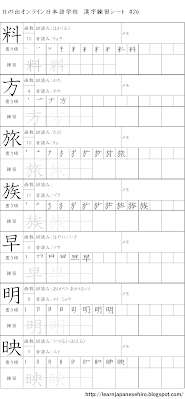
Kanji Practice Sheets. Download here:  JLPT N4 Level ↓ #27 #26